PUB is committed to responsible environmental management across all of its operations. A key part of this commitment is the waste oil and fuel recovery programme at the Betio Power Station, which ensures that waste products from power generation are safely collected, treated, and disposed of — protecting South Tarawa’s land and lagoon environment.
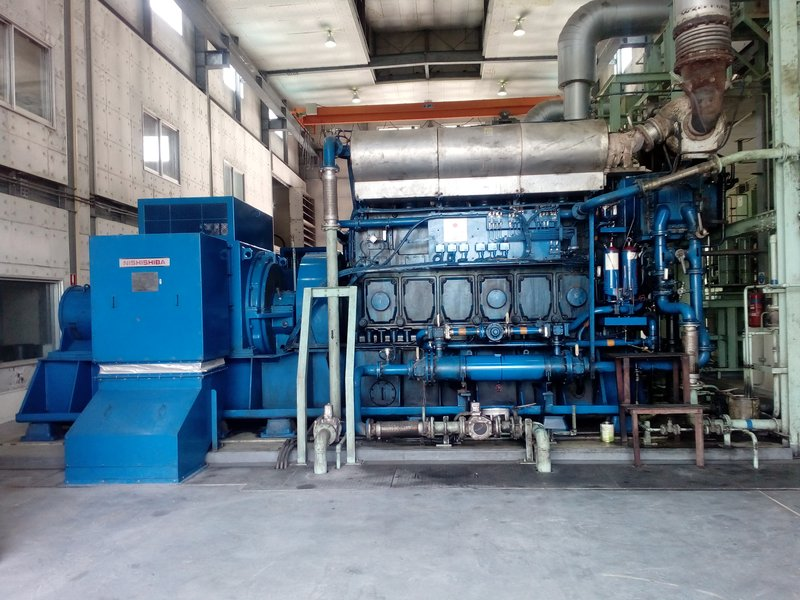
One of PUB’s diesel generators at the Betio Power Station — the starting point for the waste oil recovery process.
Power generation produces waste fuel and used lubricating oil as natural by-products. Rather than allowing these materials to accumulate or cause environmental harm, PUB has established a structured recovery system. Waste fuel from generators and day tanks is collected through a dedicated sump and pipeline system, then transferred to bulk waste oil storage tanks. Water is carefully separated using an API oil-water interceptor, and the recovered oil is sampled and tested to determine its quality.
From waste to resource: Oil that meets export specifications is transferred to PUB’s fuel supplier for proper recycling or disposal overseas. Used lubricants follow a similar path — collected after engine servicing, stored securely in drums and cube tanks, then refined and handed to the lubricant supplier’s disposal system. Nothing is wasted, and nothing is left to pollute.
PUB has been investing in staff training to strengthen these processes. Dedicated training days have brought together power generation and maintenance teams to review every step of the fuel and lubricant lifecycle — from procurement and storage through to waste recovery and final disposal. This builds the skills and awareness needed to maintain high environmental standards every day.
Responsible waste management is not just good practice — it is part of PUB’s commitment to operating sustainably and protecting the environment for future generations of I-Kiribati.