
South Tarawa Renewable Energy Project (STREP)
South Tarawa’s energy future is taking shape at Bonriki, where the South Tarawa Renewable Energy Project (STREP) is rapidly approaching completion. This landmark project will deliver a 5 MW solar photovoltaic plant paired with a 13 MWh battery energy storage system — the largest renewable energy installation in Kiribati’s history.
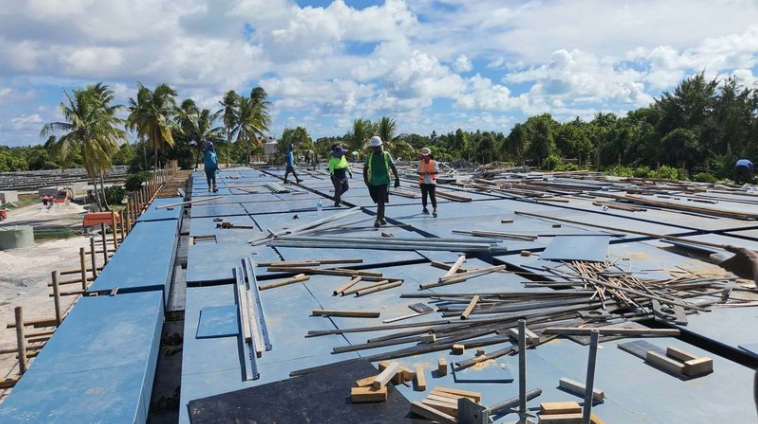
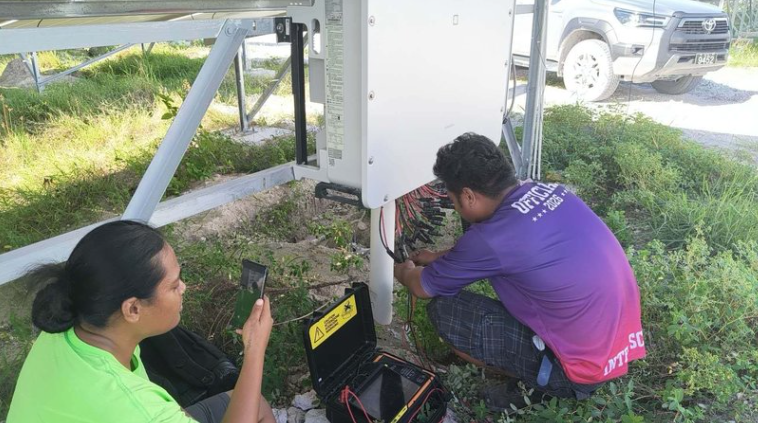
Left: The new substation taking shape at the Bonriki solar farm. Right: PUB’s solar team conducting performance testing on the newly installed panels.
The solar plant and battery installations are now essentially complete, with all PV modules, inverters, and battery cabinets fully installed. PUB’s own renewable energy team is actively involved in commissioning activities, including IV curve testing across the site — an important step in verifying that every panel is performing to specification.
5 MW
Solar PV Capacity
13 MWh
Battery Storage
99%
PV Plant Complete
Construction of the new substation is progressing well, with the building’s foundations, floor, and scaffolding now complete. Roof formwork is underway and the electrical fit-out — including switchgear, control panels, and medium-voltage cabling — is on track for mid-year. The project also includes upgrades to the local low-voltage distribution network to support the new solar capacity.
What this means for South Tarawa: Once fully operational, STREP will significantly increase PUB’s renewable energy share, reduce reliance on imported diesel fuel, lower carbon emissions, and contribute to more stable electricity supply across the island. The battery storage system will help smooth out power delivery, storing solar energy during the day for use in the evening hours.
Final commissioning and testing activities are scheduled through to July 2026, with the project expected to begin feeding clean energy into the grid shortly after. This is a major step forward in Kiribati’s journey toward a more sustainable and resilient energy future.